In this article
- 1. Title and authority: accountant or financial advisor?
- 2. Sector experience
- 3. Calendar management and reminders
- 4. Communication and availability
- 5. Scope of service and written contract
- Accountant selection checklist
- 6. Reporting and advisory
- 7. Needs change with your stage of business
- 8. Warning signs
- Frequently Asked Questions
- In Short
Short answer: When choosing an accountant in Ankara, first verify the professional title (SMMM or YMM) and chamber registration. Then look at sector experience, how they communicate, how they manage the filing calendar and what the written contract covers. Price should not be the only criterion; the penalty for a single missed filing can easily exceed the difference between two quotes.
Ankara is home to public institutions, the trade registry and many tax offices. Working with a financial advisor who knows where and when each document goes genuinely speeds up your business. This guide covers what a business owner looking for an accountant in Ankara should ask in the first meeting and which signs to watch for.
1. Title and authority: accountant or financial advisor?
In everyday Turkish, everyone is called an "accountant", but the person who can sign your tax returns and take responsibility before the tax office is a licensed professional. This authority is regulated by Law No. 3568, and in practice you will usually work with a Certified Public Accountant (SMMM). We explain the difference between titles in detail in our article on financial advisors versus accountants.
Do not hesitate to ask which chamber the person is registered with and for their registration number. You can verify this in minutes on TÜRMOB's member search. Working with someone without a licence means having no one accountable when problems arise.
2. Sector experience
Accounting for an e-commerce seller, a construction firm and a motorcycle courier follows the same logic, but the details differ greatly. Experience with marketplace commissions, progress invoices, withholding transactions or Bağ-Kur tracking prevents errors from the start. In the first meeting, ask: "How many clients do you have in my sector, and what is the most common mistake you see?" A clear answer with examples is the best sign of experience.
If you sell on marketplaces, look for a team experienced in e-commerce accounting; if you are a courier working with platforms, look for motorcycle courier accounting expertise.

3. Calendar management and reminders
A good financial advisor does not ask you about filing dates; they remind you. VAT and the withholding and social security return are filed every month, while provisional tax and annual returns are filed in specific months. Ask who tracks the calendar and how: Do you get document reminders at the start of the month? Are payment amounts sent to you before the deadline?
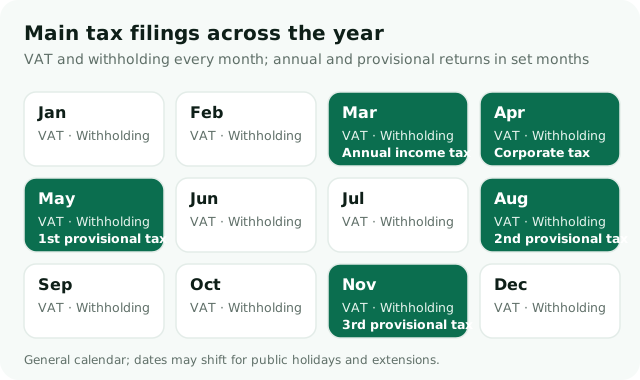
To see all the dates, save our 2026 tax calendar guide.
4. Communication and availability
The most common complaint about accountants is "they don't answer the phone". Clarify from the start whom you can reach, through which channel and how quickly. Can you send documents by e-mail, message or a shared online folder? Is there a dedicated contact person for you? The answers determine your experience throughout the year.
Location matters, but less than people think. Many people searching for an accountant in Kızılay want an office nearby, yet most of the work is now digital. Still, a team with an office in Çankaya, Kızılay or another central spot is practical for wet-signature tasks and face-to-face meetings. We describe the digital workflow in how online accounting works.
5. Scope of service and written contract
"Monthly accounting" does not mean the same thing to everyone. Are payroll, social security filings, e-invoice setup, annual returns or financial reporting included? Seeing the scope in a written contract prevents disputes later. We list what is standard in what monthly accounting includes.
Accountant selection checklist
You can take the table below to your first meeting. Noting the answers in the right-hand column makes it easy to compare candidates.
| Criterion | What to ask | A good answer |
|---|---|---|
| Title and chamber | Are you an SMMM, which chamber are you registered with? | Registration number and chamber given clearly |
| Sector experience | How many clients do you have in my sector? | Concrete examples and common mistakes |
| Calendar tracking | How do you remind me of filings and payments? | Regular reminders and amount notices |
| Communication | Whom do I contact, and how? | Dedicated contact and clear response time |
| Scope | Are payroll, e-invoicing and annual returns included? | Listed item by item in the contract |
| Reporting | Will you send me regular reports? | Monthly or periodic summary |
| Digital setup | How can I send documents? | E-mail, portal or messaging accepted |
6. Reporting and advisory
Accounting is not just filing returns. A good financial advisor in Ankara answers "How much tax will we owe this month, and what should we watch next quarter?" in advance. Periodic profit-and-loss summaries, estimated tax and cash planning make decisions easier. If you need this, see our financial reporting and advisory page.
Tax planning belongs here too. Collecting expense documents fully, knowing which costs are deductible and choosing the right company type reduce the tax burden within legal limits. Our guide to deductible business expenses is a good start.
7. Needs change with your stage of business
A newly opened sole proprietorship and a limited company with twenty employees expect different things from an accountant. When choosing, think about today's needs and the next two years together.
For new businesses, the right start is critical. Company type, tax type, activity code and invoicing are set in the first month; mistakes made here carry over for years. If you cannot decide, read sole trader or limited company. For opening steps, see how to open a sole proprietorship.
For growing businesses, payroll, e-transformation and reporting come first. When hiring your first employee, social security registration and payroll must be set up correctly; our first employee checklist helps. As turnover grows, e-invoice and e-ledger obligations arise; a team that plans the e-invoicing transition avoids last-minute rush.
8. Warning signs
- Avoiding giving title or chamber registration details.
- Saying "we'll handle it" without receiving documents, or suggesting off-the-books solutions.
- Not sending you copies of returns and tax assessments.
- Not explaining who holds your e-Government, tax and social security passwords and how.
- Starting work without a contract.
If you see any of these signs, it is wise to meet another candidate. If you are still at the formation stage, choosing before opening lets the same team run your company formation as well.
Frequently Asked Questions
What should I check first when choosing an accountant in Ankara?
Verify the title and chamber registration first. Working with an SMMM or YMM registered with a chamber such as the Ankara SMMM Chamber ensures returns are filed by an authorised person and responsibility is clear.
Does my accountant's office need to be close to me?
No. Documents, returns and notifications are largely digital. Still, a team with an office in a central spot like Kızılay saves time on signature tasks and face-to-face meetings.
How are accounting fees determined?
Fees depend on company type, monthly document volume, number of employees and additional services. Ask for the scope in writing and which tasks are charged separately.
Can I work with an Ankara accountant if I am outside Ankara?
Yes. Returns, filings and documents are handled digitally, so the city does not matter. If your business is in Ankara, a team that knows the local trade registry, tax offices and chambers saves significant time on in-person procedures.
Should my financial advisor give me copies of returns?
Yes. A copy of every return and tax assessment should be sent to you so you can track amounts, deadlines and past periods yourself.
What information should I bring to the first meeting?
Prepare your line of business, estimated monthly invoice count, number of employees and existing company details if any. This lets the scope and workload be assessed correctly in the first meeting.
What information should I share with my accountant?
Identity and tax details, bank transactions, purchase and sales invoices, expense documents, employee details if any, and contracts. Where possible, prefer official authorisation over sharing passwords.
In Short
When choosing an accountant in Ankara, the right question is not "who is cheapest?" but "who will run my business completely and on time?" Title, sector experience, communication and written scope answer that question.
We can clarify your business's needs together at our Kızılay office or in an online initial meeting. Review our bookkeeping and accounting service or contact us to schedule a meeting.